The Benefits of an À La Carte Menu: Flexibility, Customization, and Excellence in Dining
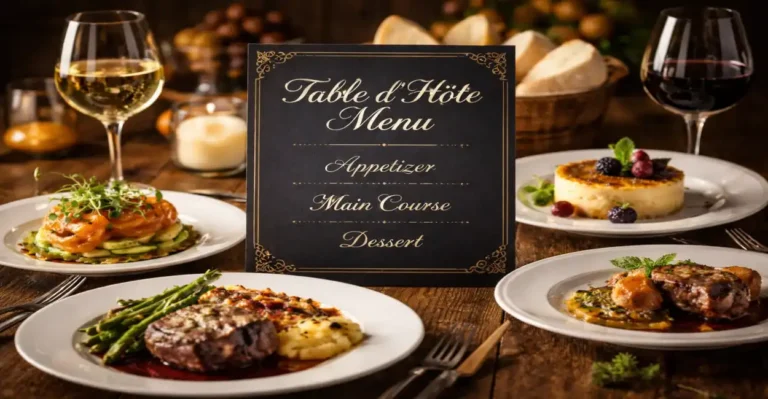
The à la carte menu has long been a staple of fine dining and modern restaurants, offering diners the freedom to choose each dish individually. Unlike a Table d’Hôte menu, where meals come with pre-set courses for a fixed price, an à la carte menu allows customers to pick what they want, creating a highly personalized dining experience.
Whether you’re a restaurant owner or a diner seeking flexibility, this type of menu offers numerous benefits.
In this article, we’ll explore the benefits of an à la carte menu, compare it to the Table d’Hôte menu, and explain why it remains a preferred option in many dining establishments.
CLICK HERE TO READ: The Benefits of a Table d’Hote Men
1. Customization and Flexibility: The Ultimate Freedom for Diners
For Diners: Tailored to Your Tastes
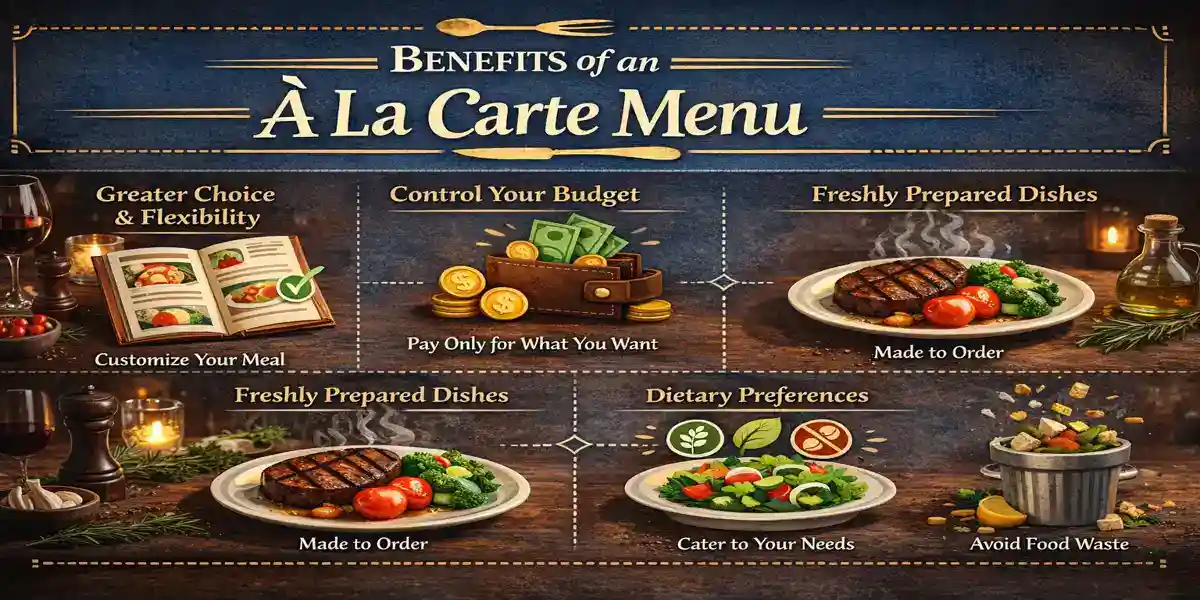
One of the greatest advantages of an à la carte menu is customization. Unlike fixed-price menus, diners have the ability to choose individual dishes from the menu. This allows for a more personalized meal, as guests can pick dishes that fit their preferences and dietary needs.
Whether you’re in the mood for a light appetizer, a rich main course, or just a dessert, you’re in control of your choices.
- Avoiding Disliked Dishes: If you dislike certain ingredients or courses, you can easily skip them without having to settle for an entire pre-arranged meal.
- Mix and Match: You can create your ideal meal by selecting a variety of items that suit your tastes. A starter might be paired with a main dish, or multiple smaller plates can be chosen instead of a full entrée.
For Restaurants: Catering to a Broader Audience
An à la carte menu also allows restaurants to cater to a wide range of dietary needs. By offering diverse options for vegetarians, vegans, and those with food allergies or other restrictions, restaurants can ensure they appeal to a broader audience.
2. Higher Quality and Better Presentation
For Diners: Focused on Excellence
With an à la carte menu, the restaurant can put more emphasis on quality. Each dish is made-to-order, allowing chefs to focus on perfecting the preparation, presentation, and flavor of each individual dish. This is particularly true in fine dining, where every dish must reflect the restaurant’s culinary expertise.
- Attention to detail: Since chefs aren’t preparing a large batch of various courses for a group, they can focus more on each dish’s taste, plating, and presentation.
- Fresh ingredients: Many restaurants using an à la carte menu also emphasize the use of seasonal and fresh ingredients to craft dishes that meet the highest standards of flavor.
For Restaurants: Showcasing Chef’s Talent
An à la carte menu allows chefs to truly showcase their skills. Each dish is carefully crafted, allowing them to experiment with flavors, seasonal ingredients, and plating. Whether it’s a signature dish or an experimental creation, the menu format allows chefs to showcase their culinary artistry. This type of menu is often associated with fine dining, where attention to detail is crucial.
3. More Control Over Dining Experience
For Diners: Control Portions and Budget
The à la carte menu gives diners more control over both portion sizes and the total cost of their meal. If you’re not feeling particularly hungry, you can opt for a small appetizer and skip the larger entrée. On the other hand, if you’re in the mood for a more substantial meal, you can choose a larger entrée or add extra sides or dishes to your order.
- Flexible pricing: Each item is priced separately, so you can create a meal that suits both your appetite and your budget. It’s perfect for those who want a quick bite without breaking the bank or those who want to indulge and try multiple items.
- Meal pacing: The ability to select dishes one at a time also allows you to pace your meal at your own speed. You can savor each course without feeling rushed or overwhelmed by multiple courses served at once.
For Restaurants: Better Cost Management
For restaurant owners, the à la carte menu provides better insight into food costs. With individual pricing, restaurants can better manage inventory, reduce waste, and accurately predict food costs. It also gives flexibility in terms of pricing high-end items (such as premium steaks or seafood) while offering more affordable options for customers on a budget.
4. Ideal for Seasonal and Local Ingredients
For Diners: Enjoy the Best of Seasonal Produce
An à la carte menu often supports the use of seasonal and local ingredients. Since the menu can change frequently, restaurants have the flexibility to feature fresh produce and locally sourced ingredients. This is a huge benefit for diners who want to experience food that reflects the local culture and seasonality.
- Sustainability: Many restaurants use an à la carte menu to emphasize sustainability by sourcing locally grown produce and sustainably caught seafood. This not only reduces carbon footprints but also supports local farmers and suppliers.
- Seasonal dishes: For example, during summer, a tomato-based dish might be featured, while fall might bring pumpkin soup to the forefront. These seasonal items provide an opportunity for diners to experience the flavors of the time of year.
For Restaurants: Support Local Communities
Restaurants that emphasize local sourcing through their à la carte menus help stimulate the local economy. This also builds a strong connection between the restaurant and the community, showing that the restaurant cares about sustainability and quality.
5. Encourages Exploration and Discovery
For Diners: A New Experience Every Time
Because the à la carte menu offers so many options, diners are encouraged to explore new dishes with every visit. The wide variety of choices ensures that diners can have a unique experience each time they dine, whether by trying new combinations or opting for seasonal specials.
For Restaurants: Driving Repeat Business
Offering an à la carte menu also increases the likelihood that diners will return to try different items. The ability to mix and match dishes means that there’s always something new to try, encouraging customers to return frequently.
6. Better for Special Occasions
For Diners: Perfect for Celebrations
The à la carte menu is perfect for special occasions like birthdays, anniversaries, or business dinners. Since diners have the freedom to choose from a wide variety of dishes, it creates a more personalized experience. Everyone at the table can enjoy exactly what they want, making celebrations feel more special.
For Restaurants: Catering to Special Events
For restaurants, the à la carte menu is ideal for catering to events and group dining. It allows the restaurant to easily accommodate diverse tastes and dietary preferences without having to worry about one-size-fits-all options like those offered in a Table d’Hôte menu.
7. Better for Upselling and Pairings
For Diners: Wine and Food Pairings
When dining à la carte, customers have the opportunity to pair their dishes with specific wines, cocktails, or specialty beverages. This makes the dining experience more engaging and personalized. Whether it’s a white wine with seafood or a dark beer with a rich steak, the à la carte menu enhances pairing options.
For Restaurants: Beverage Sales Boost
For restaurants, the à la carte menu opens up upselling opportunities. By offering carefully curated wine and drink pairings alongside menu items, restaurants can increase their average check size while providing a more comprehensive dining experience for customers.
À La Carte Menu vs Table d’Hôte Menu: Key Differences
Here’s a comparison table highlighting the key differences between an à la carte menu and a Table d’Hôte menu:
| Aspect | À La Carte Menu | Table d’Hôte Menu |
|---|---|---|
| Customization | Highly customizable; diners select individual dishes. | Pre-set menu with fixed courses; limited customization. |
| Price | Each dish is priced separately, allowing for flexibility. | Fixed price for a set number of courses. |
| Meal Structure | Diners can choose any combination of courses. | A predetermined meal with a specific number of courses. |
| Portion Size | Portions vary depending on the dish selected. | Set portion sizes for each course. |
| Dining Experience | Allows for a more personalized, tailored experience. | Designed for a more structured and communal experience. |
| Variety | Offers a wide variety of dishes to choose from. | Limited variety; typically features a small number of dishes. |
| Ideal For | Casual and fine dining; customers seeking flexibility. | Group events, special occasions, or prix-fixe dining. |
| Cost Control | Diners control the overall cost by choosing specific items. | Fixed cost makes it easier to budget for large groups. |
| Food Management | Can lead to more waste if dishes are not ordered in balance. | Easier for the kitchen to manage portions and reduce waste. |
| Restaurant Focus | Focuses on showcasing diverse culinary creations. | Focuses on providing a set, cohesive dining experience. |
How Many Restaurants Use an À La Carte Menu?
Widespread Adoption in Fine Dining
The à la carte menu is a common choice for fine dining restaurants. Many upscale establishments favor this format because it allows them to provide a diverse and high-quality dining experience for their guests. It provides the flexibility to offer unique dishes that highlight seasonal ingredients and the chef’s creativity.
Casual and Fast Casual Restaurants Also Use À La Carte
While fine dining is synonymous with à la carte menus, many casual and fast-casual restaurants also use this format. For example, burger joints, pasta places, and cafés often have à la carte menus that allow diners to build their own meals by selecting individual items like sides, sauces, and mains. The popularity of this format has expanded beyond high-end dining, making it accessible to a wide audience.
Why Big Restaurants Use an À La Carte Menu
1. Flexibility in Food Offerings
Large restaurants use à la carte menus because they allow for a wide variety of dishes. This is ideal for restaurants that want to cater to a large customer base with diverse tastes and dietary needs. It allows them to expand their menu and offer different combinations of dishes without forcing diners into a pre-set menu.
2. Showcasing the Chef’s Talent
Big restaurants often use à la carte menus as a platform to showcase the culinary skills of their chefs. Since each dish is individually priced and prepared, it offers chefs the freedom to experiment with different flavors and creative presentations, setting them apart from their competition.
3. Managing Customer Expectations and Costs
By using an à la carte menu, big restaurants can manage food costs more effectively. Since each item is priced separately, they can better predict food costs based on customer orders. This helps with inventory management, reducing waste and increasing profitability.
Conclusion: The Lasting Appeal of the À La Carte Menu
The à la carte menu offers unparalleled flexibility for both diners and restaurants. It provides a personalized, high-quality experience where diners have the freedom to choose what they want, in the portions they desire, and within their budget. From better cost management to the ability to showcase seasonal ingredients, this type of menu format is one that benefits all parties involved. Whether you’re craving a hearty steak, a light appetizer, or a decadent dessert, the à la carte menu ensures there’s something for everyone.
FAQs
- What is an à la carte menu?
An à la carte menu offers individually priced dishes, allowing diners to select and customize their meal based on their preferences. - Is an à la carte menu more expensive than a set menu?
Generally, à la carte menus can be more expensive as diners pay for each dish separately, while a set menu offers a fixed price for a pre-selected set of courses. - Why do restaurants use an à la carte menu?
Restaurants use à la carte menus to provide more customization, showcase chef creativity, and cater to a variety of customer preferences. - Can an à la carte menu be customized?
Yes, many à la carte menus offer seasonal specials or rotating dishes, allowing for customization based on fresh ingredients and customer preferences. - How does an à la carte menu benefit restaurants?
An à la carte menu allows restaurants to better manage food costs, showcase culinary skills, and appeal to diners seeking variety and quality.